awesomescope
Science is all around us, from the stars in the night sky to the tiny cells that make up our bodies. It’s a fascinating and ever-evolving field that holds the key to understanding the world we live in. As a parent, you have the opportunity to ignite your child’s curiosity and instil a lifelong love of science from an early age. Here are some practical tips and strategies shared by a senior school in Surrey to help your child learn to love science and embrace the wonders of the natural world.
1. Encourage Curiosity and Wonder
Foster a sense of curiosity and wonder in your child by encouraging them to ask questions and explore the world around them. Emphasize that it’s okay not to have all the answers and that curiosity is the driving force behind scientific inquiry. Take advantage of teachable moments in everyday life to spark discussions about natural phenomena, such as weather patterns, plant growth, or animal behaviour.
2. Make Science Fun and Engaging
Learning science doesn’t have to be dull or intimidating. Make science fun and engaging for your child by incorporating hands-on experiments, activities, and projects into their learning experience. Set up a makeshift laboratory in your kitchen and conduct simple science experiments using household materials. Visit science museums, nature centres, and planetariums to expose your child to interactive exhibits and immersive learning experiences.
3. Explore STEM Toys and Games
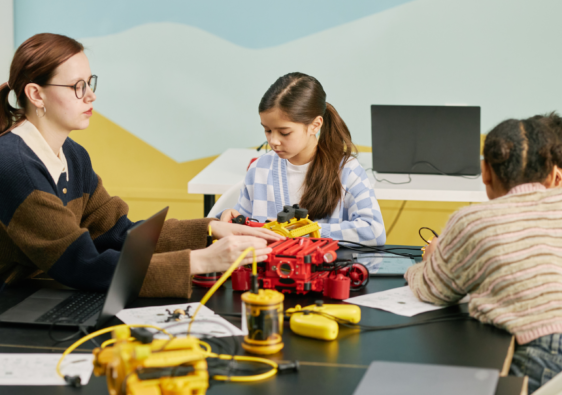
Invest in STEM (Science, Technology, Engineering, and Mathematics) toys and games that encourage exploration, problem-solving, and critical thinking skills. Choose age-appropriate toys and kits that align with your child’s interests and curiosity, whether it’s building robots, conducting chemistry experiments, or exploring the principles of physics. STEM toys and games provide hands-on learning opportunities that make science come alive for children.
4. Connect Science to Real-World Applications
Help your child understand the relevance of science by connecting it to real-world applications and everyday experiences. Discuss how scientific principles are used in technology, medicine, environmental conservation, and other fields to solve problems and improve lives. Encourage your child to think critically about the impact of science on society and the importance of making informed decisions based on scientific evidence.

5. Support Exploration and Inquiry
Provide opportunities for your child to explore their interests and pursue their own scientific inquiries. Encourage them to conduct independent research, make observations, and formulate hypotheses about the world around them. Support their efforts by providing access to books, websites, and other resources that expand their knowledge and understanding of scientific concepts.
6. Be a Science Role Model
Lead by example and demonstrate your own enthusiasm for science and discovery. Share your own interests and experiences in science with your child, whether it’s stargazing, gardening, or experimenting in the kitchen. Engage in science-related activities together as a family, such as birdwatching, nature hikes, or backyard experiments. Your enthusiasm and curiosity will inspire your child to develop a similar passion for science.
7. Celebrate Achievements and Curiosity
Celebrate your child’s achievements and curiosity in science to reinforce their interest and motivation. Praise their efforts, discoveries, and insights, no matter how small. Create opportunities for them to showcase their science projects, experiments, or discoveries to family, friends, and peers. By celebrating their curiosity and accomplishments, you’ll boost their confidence and encourage them to continue exploring the wonders of science.
8. Emphasise the Fun of Failure
Encourage your child to embrace failure as an essential part of the scientific process. Help them understand that setbacks and mistakes are opportunities for learning and growth. Encourage a growth mindset by emphasizing that even the most famous scientists faced failures and challenges on their journey to discovery. Encourage resilience and perseverance in the face of obstacles, and celebrate the process of learning and experimentation, regardless of the outcome.
Helping your child learn to love science is about nurturing their curiosity, fostering a sense of wonder, and providing opportunities for hands-on exploration and discovery. By making science fun, engaging, and relevant to their lives, you can ignite a lifelong passion for learning and inquiry. Embrace the wonders of the natural world together as a family, and watch as your child’s love of science blossoms and grows.